



In today’s rapidly evolving work landscape, businesses and employees alike are recognizing the myriad remote collaboration benefits. The advent of telecommuting and the rise of virtual teams have ushered in a new era of work culture, leveraging digital collaboration and online project management tools. At the heart of this transformation lies the concept of ‘Remote collaboration benefits,’ which we will explore comprehensively in this article.
One of the primary remote collaboration benefits is its profound impact on work-life balance. With the flexibility to work from the comfort of one’s home, employees can better tailor their work hours to suit their personal lives. Remote collaboration offers flexibility, access to a broader talent pool, reduced commuting, cost savings, and the ability to work from anywhere while also fostering a better work-life balance and increasing productivity and job satisfaction. This not only enhances overall job satisfaction but also contributes to increased remote employee productivity. As we delve deeper into the remote work trends of 2023, it becomes clear that the integration of virtual meetings and remote team communication facilitates a seamless workflow, making it easier for teams to achieve their goals.
The success factors of remote work are closely linked to the strategic use of remote collaboration tools. These tools empower teams to collaborate effectively, regardless of geographical distances. Furthermore, remote work offers a wide array of advantages, as illustrated by remote work case studies across various industries. For small businesses, remote collaboration can be a game-changer, while startups can thrive using remote collaboration tools. Healthcare professionals and freelancers, in particular, enjoy unique remote collaboration benefits in terms of work efficiency and flexibility.
As we explore the remote work landscape in this article, we will examine the pros and cons of remote work, statistics, and the far-reaching impact on company culture and employee retention. With the right remote collaboration solutions, strategies, and best practices, businesses can tap into the incredible remote collaboration benefits in 2023 and beyond, ultimately achieving a higher return on investment and staying ahead in this era of evolving work dynamics.
Remote Collaboration Benefits for Small Businesses
Small businesses are increasingly embracing remote collaboration to gain a competitive edge in today’s business landscape. In this section, we’ll explore how remote collaboration levels the playing field for these enterprises, providing them with remote collaboration benefits in the realm of remote work and digital collaboration.
Telecommuting Enhances Flexibility
One of the most significant remote collaboration benefits for small businesses is the flexibility it offers. Small businesses can leverage telecommuting to access a global talent pool and assemble virtual teams, breaking down geographical barriers. This approach allows them to tap into specialized skills and competencies, levelling the playing field with larger enterprises.
Cost-Efficiency Through Virtual Teams
Small businesses can significantly reduce overhead costs by employing remote teams. Traditional office space and equipment expenses are minimized, enabling businesses to allocate resources more efficiently. This cost-effectiveness is a key advantage of remote collaboration.
Nurturing a Positive Remote Work Culture
Creating a remote work culture is essential for small businesses. By fostering an environment that supports remote work, they can attract top talent and boost employee satisfaction. A strong remote work culture helps small businesses compete on an even playing field with larger organizations.
Leveraging Digital Collaboration Tools
Digital collaboration tools are a cornerstone of successful remote work. Small businesses can access a wide range of these tools, which facilitate efficient online project management and remote team communication. This enables streamlined operations and productivity, levelling the playing field.
Enhancing Work-Life Balance
Remote collaboration provides small businesses with the opportunity to offer their employees a better work-life balance. This perk can attract and retain top talent, which is crucial for small business success. It levels the playing field with larger enterprises by creating a more appealing work environment.
Boosting Remote Employee Productivity
Remote work technology and collaboration tools empower employees to work more efficiently. Small businesses can achieve enhanced remote work productivity by providing their teams with the necessary resources. This boost in productivity helps them compete effectively with larger companies.
Remote Collaboration Tools for Startups
Remote collaboration tools are a game-changer for startups, offering an array of essential features that empower virtual teams to thrive in today’s dynamic business landscape. From streamlined document sharing to powerful task management capabilities, these tools are the backbone of successful remote work strategies. In this section, we delve into seven specific features of remote collaboration tools that are instrumental for startups. Let’s explore how these tools enhance remote work, foster digital collaboration, and promote a work culture that values efficiency, productivity, and the work-life balance of employees.
Streamlined Document Sharing
Remote collaboration tools simplify document sharing for startups. Team members can access and edit documents in real time, ensuring everyone is on the same page, regardless of their physical location. This seamless sharing of information enhances productivity and fosters a cohesive remote work culture.
Task Assignment and Tracking
These tools enable startups to assign tasks and monitor progress effortlessly. Project managers can allocate responsibilities to team members and track project milestones, ensuring projects stay on course and deadlines are met. This feature enhances remote work efficiency and project management.
Virtual Meetings and Conferencing
Remote collaboration tools offer virtual meeting capabilities, which are crucial for startups. These tools enable face-to-face communication through video conferences, ensuring effective collaboration, idea exchange, and problem-solving, furthering the success of virtual teams.
Document Version Control
Version control is essential for startups working on multiple documents collaboratively. These tools provide version history tracking, allowing team members to access previous document versions, review changes, and maintain document integrity. This feature safeguards against errors and promotes digital collaboration.
Centralized Communication Channels
Remote collaboration tools offer centralized communication platforms where teams can interact, share updates, and engage in discussions. This centralization fosters a sense of unity among remote employees, improves team communication, and boosts overall productivity.
Integration with Other Software
Startups often use various software tools for different purposes. Remote collaboration tools provide integrations with other essential software, such as project management, time tracking, and customer relationship management (CRM) systems. This streamlines workflow reduces manual data entry and increases overall work efficiency.
Analytics and Reporting
Remote collaboration tools include analytics and reporting features, which are crucial for assessing remote work performance and project success. Startups can track key metrics, identify areas for improvement, and make data-driven decisions to enhance remote work effectiveness and achieve their business goals.
Remote Collaboration Benefits in Healthcare
In today’s dynamic healthcare landscape, the adoption of remote collaboration benefits has become a pivotal component of operational success. Healthcare providers, administrators, and support staff are increasingly leveraging telecommuting, virtual teams, and digital collaboration to enhance patient care, streamline processes, and ensure better work-life balance. In this section, we explore seven specific remote collaboration benefits within the healthcare sector, emphasizing the remote collaboration benefits for healthcare organizations.
Improved Work-Life Balance
Within the healthcare sector, the implementation of remote collaboration benefits is redefining the work-life balance for healthcare professionals. Telecommuting and virtual teams enable healthcare workers to manage their personal lives more effectively while maintaining a high level of productivity. This flexibility is crucial for preventing burnout and enhancing overall well-being.
Enhanced Patient Care
Remote team communication and online project management tools play a pivotal role in improving patient care. Healthcare teams can coordinate care more efficiently, thanks to virtual meetings and real-time data sharing. This results in quicker and more accurate decision-making, ultimately leading to a higher quality of patient care.
Increased Productivity
A notable advantage of remote collaboration in healthcare is the significant increase in remote employee productivity. Remote work technology minimizes the distractions associated with a traditional office environment, allowing healthcare professionals to concentrate on their tasks. This boost in the efficiency of remote collaboration benefits both healthcare providers and patients.
Cost Savings
Remote collaboration solutions offer substantial cost savings for healthcare organizations. Remote collaboration benefits include reducing overhead expenses linked to physical office spaces. Additionally, remote work strategies cut down on commute times, saving resources for both healthcare workers and their employers.
Improved Communication
Effective communication is the lifeblood of healthcare, and remote team communication tools have revolutionized this aspect. Digital collaboration enables seamless communication among healthcare teams, improving the overall quality of patient care and reducing errors.
Remote Work Culture Integration
The healthcare industry is embracing a remote work culture, aligning with the remote work trends of the broader workforce. This cultural shift fosters a more diverse and inclusive work environment while attracting top talent from a wider geographical area.
Enhanced Data Security
Maintaining data security is critical in healthcare, and remote work management software plays a crucial role in this. The use of robust remote collaboration tools ensures that patient data is protected and compliant with regulatory requirements, such as HIPAA.
Remote collaboration benefits for Freelancers
Remote work is transforming the freelancing landscape, offering a myriad of remote collaboration benefits that go beyond the traditional office setup. Freelancers today are leveraging the remote collaboration benefits, which align with the ever-evolving work culture. In this section, we delve into seven specific remote collaboration benefits bring to freelancers. From an improved work-life balance to enhanced productivity, access to a global talent pool, and significant cost savings, freelancers are discovering new horizons in their profession. Let’s explore these remote collaboration benefits that empower freelancers to thrive in the digital age.
Enhanced Work-Life Balance
Freelancers who opt for remote work enjoy an improved work-life balance. The flexibility to choose when and where to work enables freelancers to better align their professional commitments with their personal lives. Telecommuting fosters an environment where one can maintain a harmonious equilibrium between work and leisure, contributing to enhanced overall well-being.
Increased Productivity
Remote work allows freelancers to capitalize on their peak productivity hours. By eliminating daily commutes and office distractions, they can focus their energy and creativity on their tasks. This results in higher work efficiency, enabling freelancers to deliver quality work while managing their time effectively.
Seamless Digital Collaboration
Virtual teams benefit from the convenience of remote collaboration tools, enhancing communication and project management. These tools streamline digital collaboration, facilitating the exchange of ideas and information, irrespective of geographical barriers. Freelancers can easily share documents, conduct virtual meetings, and collaborate in real-time, thereby boosting teamwork and productivity.
Diverse Work Opportunities
Freelancers no longer need to limit their job search to their local area. Remote work opens up a world of opportunities, allowing them to work with clients and companies from different regions and industries. This diversity can lead to a broader client base and varied projects, ultimately increasing a freelancer’s earning potential.
Cost Savings
Remote work offers financial advantages, as freelancers can reduce or eliminate expenses associated with commuting, work attire, and dining out. These cost savings contribute to increased income retention, enabling freelancers to invest in skill development and personal growth.
Improved Job Satisfaction
Remote freelancers often experience higher job satisfaction. The autonomy and freedom associated with remote work can lead to a more fulfilling work experience. Freelancers can tailor their work environment to suit their preferences, fostering a sense of ownership and motivation.
Access to a Global Talent Pool
Companies seeking freelance talent are no longer constrained by geographic limitations. This benefits freelancers by providing access to a global job market. As a result, freelancers can secure contracts and projects with organizations from different regions, further diversifying their portfolio and expanding their professional network.
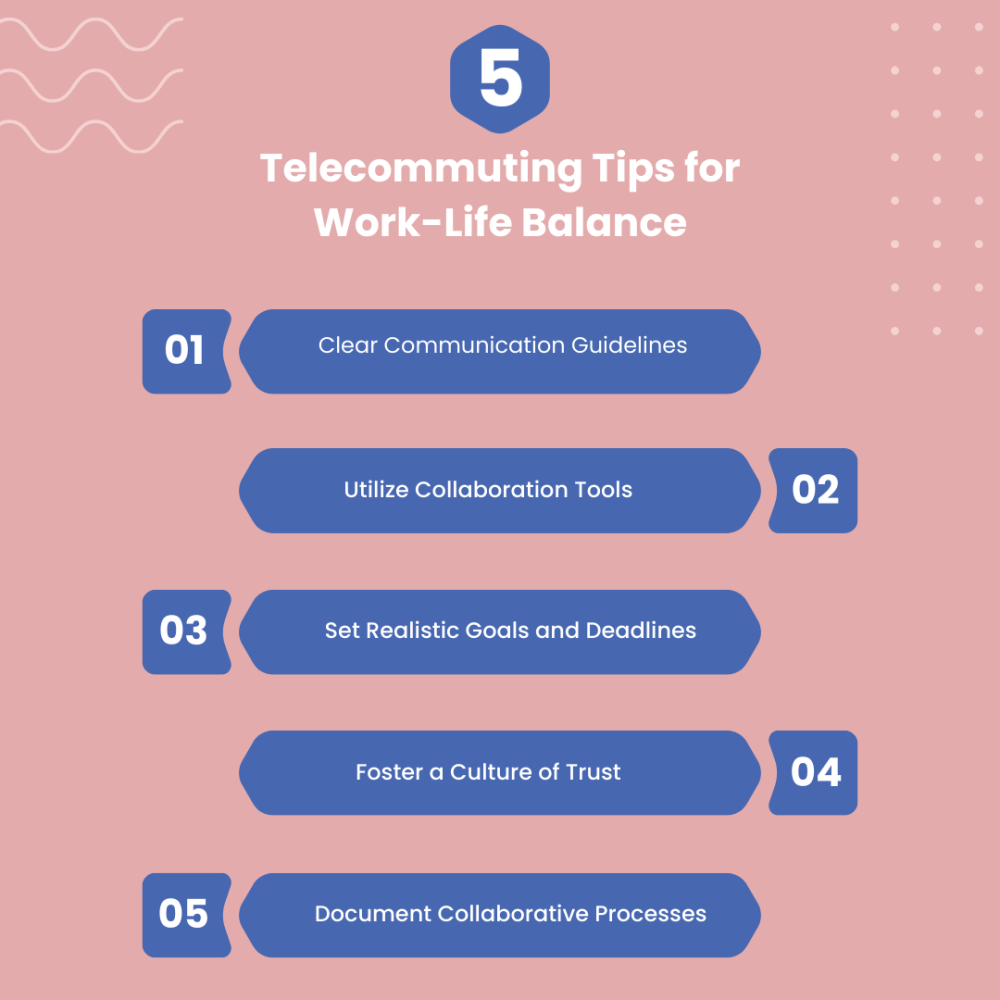
Telecommuting Tips for Work-Life Balance
In today’s digital age, telecommuting, or remote work, has revolutionized the way we approach employment. As the world continues to adapt to remote work culture, it’s crucial to explore the numerous remote collaboration benefits it brings, especially when it comes to achieving a better work-life balance. In this section, we’ll delve into seven significant remote collaboration benefits that directly contribute to improving work-life equilibrium.
Clear Communication Guidelines
Establish clear and concise communication guidelines that include expectations for response times and the use of collaborative tools. Encourage open and transparent communication among team members.
Utilize Collaboration Tools
Leverage remote collaboration tools like Slack, Microsoft Teams, or Zoom to facilitate instant messaging, video conferencing, and document sharing. Choose tools that align with your team’s specific needs.
Set Realistic Goals and Deadlines
Define project goals and establish achievable deadlines. Ensure that everyone comprehends their roles and responsibilities, promoting accountability and teamwork.
Regular Check-Ins
Schedule regular team check-ins and one-on-one meetings to allow team members to discuss progress, address challenges, and exchange ideas.
Foster a Culture of Trust
Build a culture of trust within your remote team. Trust among team members encourages open communication and a sense of belonging, which, in turn, enhances collaboration.
Document Collaborative Processes
Keep a record of collaborative processes and decisions. This documentation helps maintain clarity and transparency, especially when team members work in different time zones or have varying schedules.
Provide Ongoing Training
Invest in ongoing training and skill development to ensure that team members are proficient in using collaboration tools and best practices for remote work. Training enhances efficiency and teamwork.
Conclusion
Remote collaboration, often associated with telecommuting and virtual teams, has become a fundamental element of the evolving remote work culture. Understanding the remote collaboration benefits is essential for businesses looking to embrace the digital era and harness its benefits. One of the key remote collaboration benefits is the significant improvement it brings to work-life balance. With the right remote collaboration tools and strategies in place, employees can manage their time more efficiently, allowing for a seamless blend of personal and professional responsibilities. This newfound balance contributes to enhanced well-being and increased productivity, which are essential remote work success factors.
Moreover, remote collaboration not only boosts work-life balance but also elevates remote employee productivity. Studies and remote work statistics consistently show that remote teamwork perks include higher efficiency and output. Remote work technology, combined with virtual meetings and seamless remote team communication, fosters an environment where employees can thrive. Companies that leverage remote collaboration solutions witness tangible results, as evidenced by numerous remote work case studies.
In today’s landscape of remote work trends, remote collaboration stands as a pivotal aspect, offering remote collaboration benefits for companies of all sizes. It not only ensures productivity but also nurtures a remote work culture that values flexibility, effectiveness, and collaboration. As we delve into 2023, it’s evident that embracing remote work strategies and recognizing the remote collaboration benefits is an integral component of long-term success. The remote work ROI is undeniable, with remote work management and remote work best practices leading the way for a prosperous future, impacting both employees and businesses positively.
In conclusion, the remote collaboration benefits extend beyond productivity and efficiency; they influence company culture, employee retention, and overall success. As we explore remote collaboration tools for different industries such as healthcare, IT, HR, and marketing, the impact of remote collaboration becomes even more apparent. In a world where remote work statistics for 2023 continue to shape the way we work, understanding the remote collaboration benefits is not just a trend but a necessity for modern businesses. Remote collaboration fosters an environment where remote collaboration benefits thrive, bridging the gap between physical separation and successful teamwork.
FAQs
What are the key remote collaboration benefits?
Remote collaboration offers flexibility, access to a broader talent pool, reduced commuting, cost savings, and the ability to work from anywhere. It fosters a better work-life balance and can increase productivity and job satisfaction.
How does remote work impact company culture?
Remote work can both strengthen and challenge company culture. It may enhance flexibility but can hinder in-person interactions. Efforts are needed to maintain a strong culture, through virtual team-building activities and effective communication.
What are the remote collaboration benefits and disadvantages?
Remote collaboration benefits include flexibility and reduced commuting. Disadvantages involve isolation, distractions, and potential difficulties in team communication and work-life boundaries.
Which remote collaboration tools are the most effective?
Popular tools include Zoom, Microsoft Teams, Slack, and Trello. The choice depends on specific team needs, such as video conferencing, chat, and project management.
What are the statistics for remote work in 2023?
I don’t have real-time data, but remote work trends are influenced by global events and company policies. It’s essential to refer to recent sources for accurate statistics.
How can remote work boost employee productivity?
Remote work can enhance productivity through fewer office distractions, personalized work environments, and the ability to focus on individual tasks. Effective time management and collaboration tools also play a significant role.
What are the best practices for remote work in 2023?
Best practices include setting clear expectations, regular communication, using reliable collaboration tools, maintaining work-life balance, and investing in home office ergonomics.
What challenges are associated with remote work?
Challenges include feelings of isolation, difficulties in communication, blurred work-life boundaries, and cybersecurity risks. Ensuring effective team collaboration can be challenging.
How does remote work affect remote teams’ communication?
Remote work can lead to improved written communication but may hinder spontaneous interactions. Teams need to proactively schedule and structure communication to ensure effective collaboration.
What is the impact of remote work on employee retention?
Remote work can positively impact employee retention by offering flexibility, reducing commuting stress, and allowing employees to balance work and personal life.
What are some successful remote work case studies?
Successful case studies include companies like Automattic, Buffer, and GitLab, which have embraced remote work and demonstrated its effectiveness in maintaining productivity and employee satisfaction.
How does remote work benefit small businesses?
Remote work can benefit small businesses by reducing overhead costs, expanding their talent pool, and providing flexibility to compete with larger companies.
What are the remote collaboration benefits for IT professionals?
IT professionals benefit from remote work due to the nature of their work, which often involves troubleshooting and coding that can be done remotely. It offers flexibility and the ability to work with global clients.
How can remote work enhance work-life balance?
Remote work allows employees to better balance their personal and professional lives by eliminating commuting, providing more flexible schedules, and enabling them to work from home.
What are the remote collaboration benefits for freelancers?
Freelancers benefit from remote work by having more control over their schedules, the ability to work with clients globally, and the freedom to choose their work environments. It enhances work-life autonomy.


 Cables
 Cable Sleeves
 Content Cameras
 AV Cabinets
 AV Connectivity
 Multimedia Carts & Stands
 Shelf Brackets
 AV Equipment Shelves
 CPU Holders
 Holders
 Laptop Stands
 Monitor Mounts & Stands
 Monitor Mount Accessories
 Mounting Kits
 Projector Mounts
 Projector Mount Accessories
 Speaker Mounts
 Tablet Security Enclosures
 TV Mount Accessories
 BYOD All-In-One-Bars
 BYOD Cameras
 BYOD Conference Kits
 Collaboration Displays
 Interactive Displays
 Non-Interactive Displays
 Signage Displays
 Signage Display Mounts
 Signage Display Mount Accessories
 Huddle Space
 Small Room
 Medium Room
 Large Room
 Boardroom
 Teams Huddle Room
 Teams Small Room
 Teams Medium Room
 Teams Large Room
 Teams Scheduling Display
 Teams Accessories
 Acer Projectors
 Benq Projectors
 Epson Projectors
 NEC Projectors
 Optoma Projectors
 Panasonic Projectors
 Sony Projectors
 Viewsonic Projectors
 Vivitek Projectors
 Video phones
 Voice Gateways
 White IP Phones
 WiFi Handsets
 Airtame Wireless Presentation
 Barco Clickshare
 BenQ Instashow
 Poly Pano
 Conference Kits
 Headsets
 Webcams
 Zoom Huddle Room
 Zoom Small Room
 Zoom Medium Room
 Zoom Large Room